
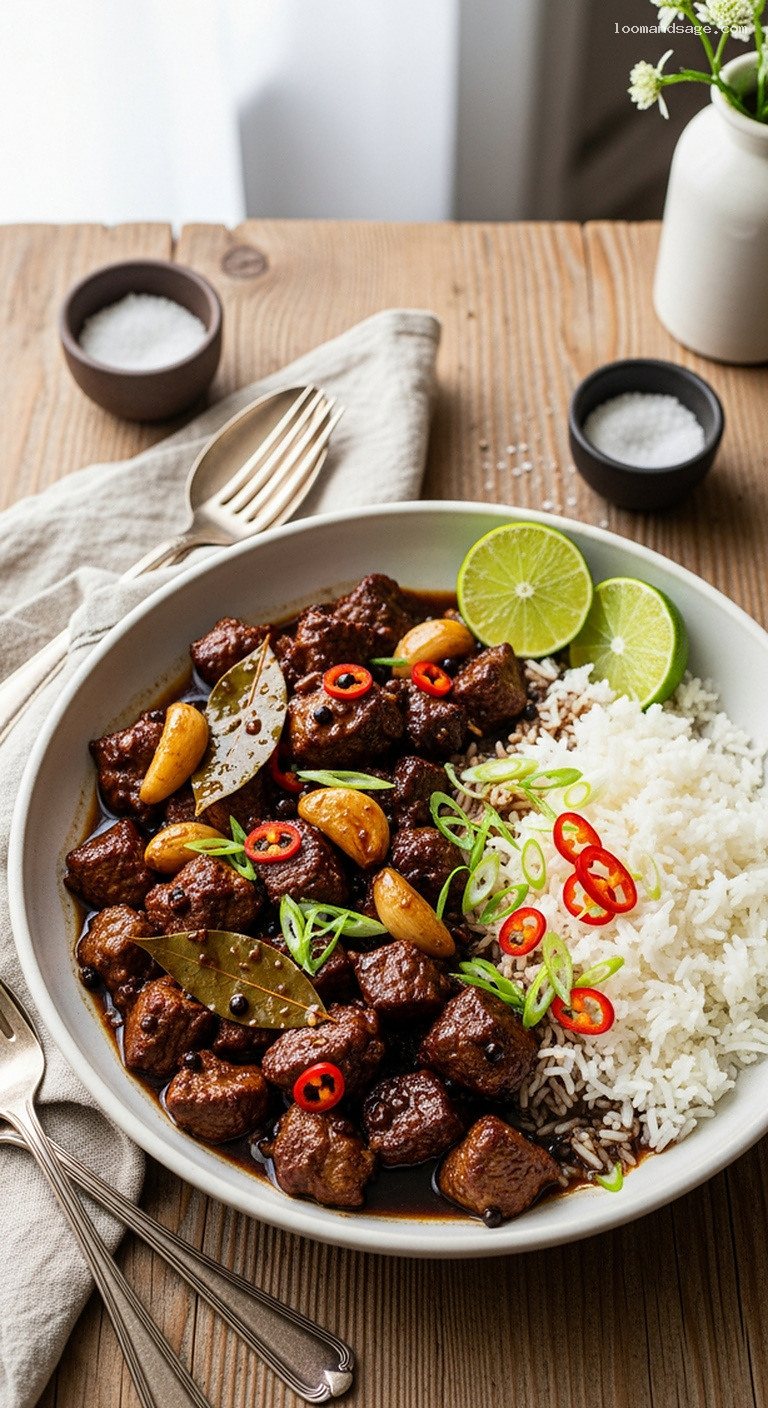
Quick Recipe Version (TL;DR)
Quick Ingredients
- 2 lb (900 g) lamb shoulder, trimmed and cut into 1 1/2-inch cubes
- 1/2 cup cane or white vinegar
- 1/3 cup soy sauce (preferably low-sodium)
- 1 cup water or unsalted beef stock
- 10–12 garlic cloves, smashed
- 1 medium yellow onion, sliced
- 2 bay leaves
- 1 1/2 tsp whole black peppercorns
- 1 tbsp dark brown sugar
- 2 tbsp neutral oil (canola, vegetable, or peanut)
- Cooked jasmine rice, scallions, and lime wedges for serving (optional)
Do This
- 1. In a bowl, combine lamb, soy sauce, vinegar, garlic, bay leaves, peppercorns, and brown sugar; toss and let stand while you prep everything else.
- 2. Pat lamb pieces dry, reserving marinade; heat oil in a heavy pot over medium-high and sear lamb in batches until browned.
- 3. Add sliced onion to the pot and sauté until softened, scraping up browned bits.
- 4. Pour in reserved marinade and water/stock, bring to a boil, then reduce to a gentle simmer.
- 5. Cover and braise on low heat for 60–70 minutes, stirring occasionally, until lamb is very tender.
- 6. Uncover and simmer 10–15 minutes more to reduce the sauce to a glossy, spoon-coating consistency; adjust seasoning.
- 7. Serve lamb and plenty of sauce over hot jasmine rice, garnished with sliced scallions and a squeeze of lime.
Why You’ll Love This Recipe
- Classic Filipino adobo flavors meet rich, tender lamb for a comforting, tangy-salty-savoury dish.
- Everything simmers in one pot, making cleanup easy and the flavor deep and concentrated.
- Flexible recipe: make it ahead, reheat beautifully, and serve for weeknight dinners or guests.
- Uses affordable lamb shoulder and everyday pantry items like soy sauce, vinegar, garlic, and peppercorns.
Grocery List
- Produce: 1 head garlic, 1 medium yellow onion, 2–3 scallions (green onions), 1–2 limes (optional), fresh chilies (optional).
- Dairy: None.
- Pantry: Lamb shoulder (or stewing lamb), soy sauce, cane or white vinegar, dark brown sugar, whole black peppercorns, bay leaves, neutral cooking oil, beef stock or water, jasmine rice, kosher or sea salt.
Full Ingredients
For the Lamb Adobo
- 2 lb (900 g) lamb shoulder or stewing lamb, trimmed of excess hard fat and cut into 1 1/2-inch (4 cm) cubes
- 1/3 cup soy sauce (preferably low-sodium)
- 1/2 cup cane vinegar (or plain white vinegar or apple cider vinegar)
- 1 cup water or unsalted beef stock
- 10–12 large garlic cloves, peeled and lightly smashed
- 1 medium yellow onion, thinly sliced
- 2 bay leaves (fresh or dried)
- 1 1/2 tsp whole black peppercorns, lightly crushed with the side of a knife
- 1 tbsp dark brown sugar (add more 1 tsp at a time to taste, if needed)
- 2 tbsp neutral oil (canola, vegetable, grapeseed, or peanut)
- 1/2 tsp kosher salt, plus more to taste (you may need more or less depending on your soy sauce)
For Serving (Optional but Recommended)
- 4 cups cooked jasmine rice (about 1 1/3 cups uncooked)
- 2–3 scallions (green onions), thinly sliced
- Lime wedges or calamansi, for squeezing over
- Thinly sliced fresh red chili or chili flakes, for heat (optional)
Step-by-Step Instructions
Step 1: Prep the lamb and aromatics
Trim any thick, waxy pieces of fat from the lamb shoulder and cut the meat into even 1 1/2-inch (4 cm) cubes so they cook at the same rate. Peel the garlic and lightly smash each clove with the flat side of a knife so it cracks but stays mostly whole. Thinly slice the onion. Lightly crush the whole peppercorns (you can use the bottom of a pan or a mortar and pestle); they should be cracked, not ground to powder. This helps them release flavor without overwhelming the sauce.
Step 2: Marinate the lamb in soy, vinegar, and spices
In a large bowl, combine the lamb cubes, soy sauce, vinegar, smashed garlic, bay leaves, cracked peppercorns, and dark brown sugar. Toss well so every piece of lamb is coated. Let the mixture sit at room temperature for about 15 minutes while you get everything else ready. If you have more time, cover and refrigerate for up to 2 hours for deeper flavor, stirring once or twice. When you are ready to cook, use tongs to lift the lamb out of the bowl onto a plate, letting excess marinade drip off; reserve all the marinade to use in the braise.
Step 3: Sear the lamb for deep flavor
Pat the lamb pieces dry with paper towels; dry surfaces brown much better. In a heavy-bottomed pot or Dutch oven (about 4–5 quarts), heat the neutral oil over medium-high heat until shimmering. Working in 2–3 batches to avoid crowding, add the lamb cubes in a single layer and sear for 2–3 minutes per side, until nicely browned. Do not move them too much; let a crust form before turning. Transfer browned lamb to a clean bowl or plate and repeat with remaining pieces, adding a little more oil if the pot looks dry. Leave all the browned bits (fond) in the pot; they are pure flavor.
Step 4: Soften the onions and deglaze the pot
Reduce the heat to medium. In the same pot, add the sliced onions and a small pinch of salt. Cook, stirring often, for 4–5 minutes, or until the onions soften and turn translucent, picking up some of the browned bits from the bottom. If the onions start to stick too much, splash in 1–2 tablespoons of water and scrape with a wooden spoon to loosen the fond. Once the onions are soft and fragrant, pour in the reserved soy-vinegar-garlic marinade and the 1 cup of water or beef stock, stirring to combine.
Step 5: Start the braise
Return the seared lamb and any accumulated juices to the pot, nestling the pieces into the liquid. The lamb should be mostly submerged; if it is not, add a little extra water or stock, a few tablespoons at a time, until it is. Increase the heat to medium-high and bring the liquid to a gentle boil. Once boiling, immediately reduce the heat to low so the liquid is at a very gentle simmer—just an occasional bubble breaking the surface. Cover the pot with a tight-fitting lid and cook for 60–70 minutes, stirring every 15 minutes or so, until the lamb is very tender when pierced with a fork.
Step 6: Uncover and reduce the sauce
When the lamb is tender, remove the lid. Taste the cooking liquid: it should be boldly seasoned, tangy, and savory. If it tastes very sharp, do not worry; it will mellow slightly as it reduces. Increase the heat to medium-low and simmer uncovered for 10–15 minutes, stirring occasionally, until the sauce thickens to a glossy consistency that coats the back of a spoon. Skim off any excess fat that collects on the surface with a spoon. Taste and adjust: add a pinch of salt if needed, a splash more vinegar for brightness, or up to 1 teaspoon additional brown sugar if you want to round out the acidity.
Step 7: Finish and serve
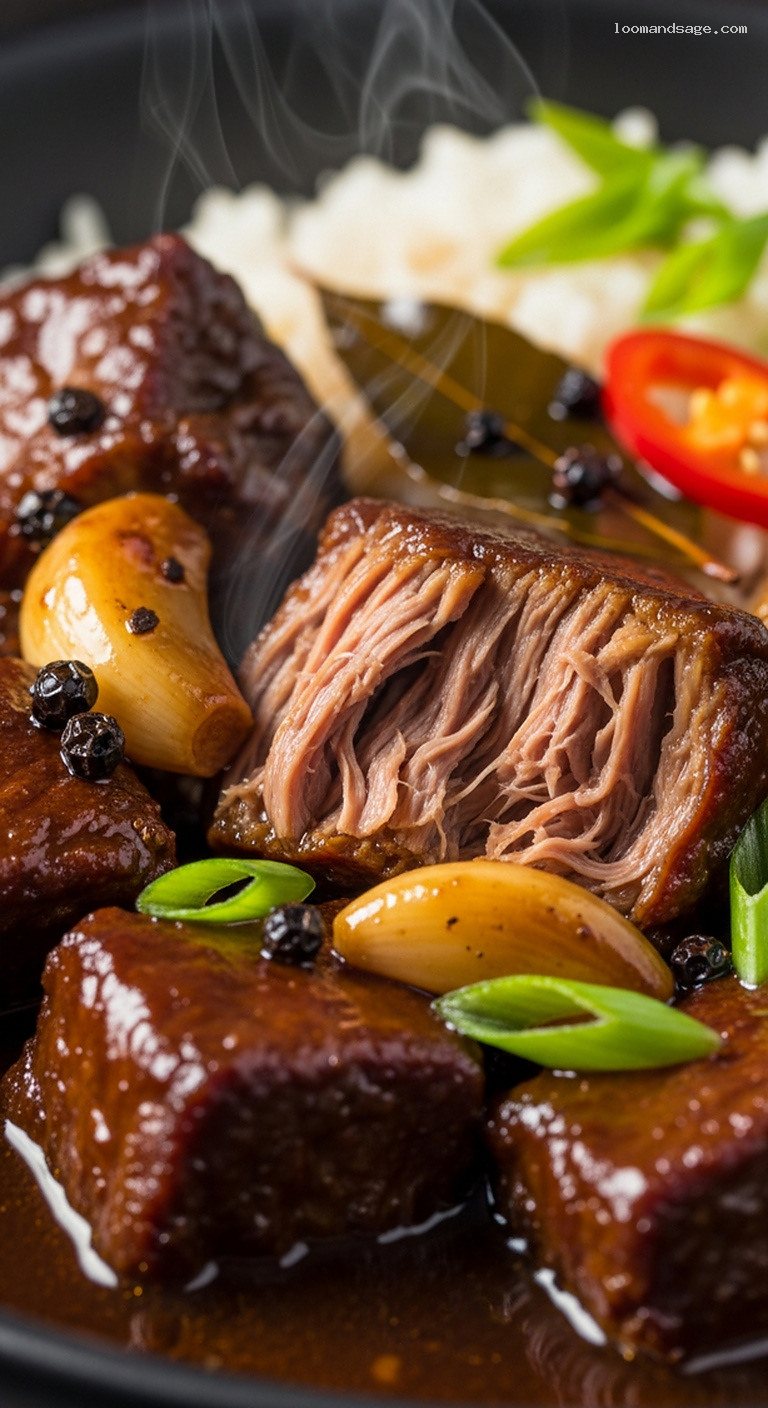
Remove the bay leaves and any large garlic skins, if present. The lamb should be fall-apart tender, with a deep mahogany color, and the sauce should be thick, glossy, and speckled with cracked peppercorns and soft garlic. Fluff your hot jasmine rice and divide among bowls or plates. Spoon generous portions of lamb and plenty of sauce over the rice. Garnish with sliced scallions and, if you like, thinly sliced fresh chili for heat. Serve with lime or calamansi wedges on the side so everyone can add as much brightness as they like. Enjoy immediately, with extra rice on standby to soak up all that savory-tangy adobo sauce.
Pro Tips
- Adjust the tang to your taste: Filipino-style adobo is meant to be noticeably tangy. If you prefer a milder vinegar punch, start with 6 tbsp vinegar instead of the full 1/2 cup, and add more to taste near the end.
- Choose the right cut of lamb: Lamb shoulder or any well-marbled stewing cut works best. Lean cuts will dry out and become tough during the long braise.
- Do not skip browning: Taking the time to sear the lamb adds a deep roasted flavor that balances the acidity of the vinegar and makes the sauce richer.
- Control the salt: Different soy sauces have different salt levels. Taste before adding extra salt at the end, especially if you did not use low-sodium soy.
- Even gentler braise: If your stove runs hot, use a heat diffuser or move the pot to the smallest burner to keep the braise at a barely-there simmer for the most tender meat.
Variations
- Coconut Lamb Adobo: Replace 1/2 cup of the water or stock with 1/2 cup unsweetened coconut milk. Add it after the initial 60–70 minute covered braise and simmer uncovered until thick and slightly creamy.
- Spicy Lamb Adobo: Add 2–3 sliced fresh red chilies or 1–2 tsp chili flakes with the onions in Step 4. You can also finish with a drizzle of chili oil for extra heat and richness.
- Oven-Braised Version: After Step 4, cover the pot and transfer to a 325°F (160°C) oven. Braise for 75–90 minutes, until tender, then reduce the sauce on the stovetop uncovered as in Step 6.
Storage & Make-Ahead
Lamb adobo is an excellent make-ahead dish and often tastes even better the next day as the flavors meld. Cool leftovers to room temperature, then transfer to an airtight container and refrigerate for up to 4 days. Reheat gently on the stovetop over low heat, adding a splash of water if the sauce has thickened too much, until steaming hot. You can also reheat in the microwave in 1-minute bursts, stirring between each, until heated through. For longer storage, freeze portions in freezer-safe containers for up to 3 months; thaw overnight in the refrigerator before reheating. Cooked rice can be stored separately in the refrigerator for up to 3 days and reheated in the microwave with a sprinkle of water to restore softness.
Nutrition (per serving)
Approximate values per serving (assuming 4 servings and not including rice or optional garnishes): about 450 calories; 30 g protein; 32 g fat; 7 g saturated fat; 7 g carbohydrates; 1 g fiber; 3 g sugars; 950 mg sodium. Actual values will vary depending on the specific cut of lamb, brand of soy sauce, and how much fat you skim from the sauce.