Quick Recipe Version (TL;DR)
Quick Ingredients
- 500 g all-purpose flour (about 4 cups)
- 7 g instant yeast (2 1/4 tsp)
- 10 g fine sea salt (1 3/4 tsp) + 1 tsp sugar
- 200 ml warm whole milk (about 3/4 cup + 1 tbsp, 110°F/43°C)
- 1 large egg + 150 g sour cream (2/3 cup)
- 100 g lard or unsalted butter, softened (7 tbsp)
- 200 g pork cracklings or very crisp lardons, chopped (7 oz)
- 1 small onion, finely grated; 2 garlic cloves, grated
- 1 tsp sweet Hungarian paprika; 1/2 tsp black pepper; 1/2 tsp crushed caraway
- 30 g lard (2 tbsp) for the filling
- Egg wash: 1 egg + 1 tbsp milk; caraway seeds + flaky salt for topping
Do This
- 1. If making cracklings from lardons, render until deeply crisp (20–25 min); cool and chop.
- 2. Pulse cracklings with grated onion, garlic, paprika, pepper, caraway, 30 g lard, and 1/4 tsp salt into a coarse paste; chill 10 min.
- 3. Mix flour, yeast, sugar, and salt. Add warm milk, egg, sour cream, and 100 g lard; knead to a smooth, soft dough (5–7 min).
- 4. Rest covered until slightly puffy, 45–60 min; chill 15 min to firm.
- 5. Roll to 35×25 cm; spread half the crackling paste; fold in thirds. Chill 20 min.
- 6. Repeat roll/spread/fold with remaining paste; rest 20 min. Roll and do one more plain fold; rest 20 min.
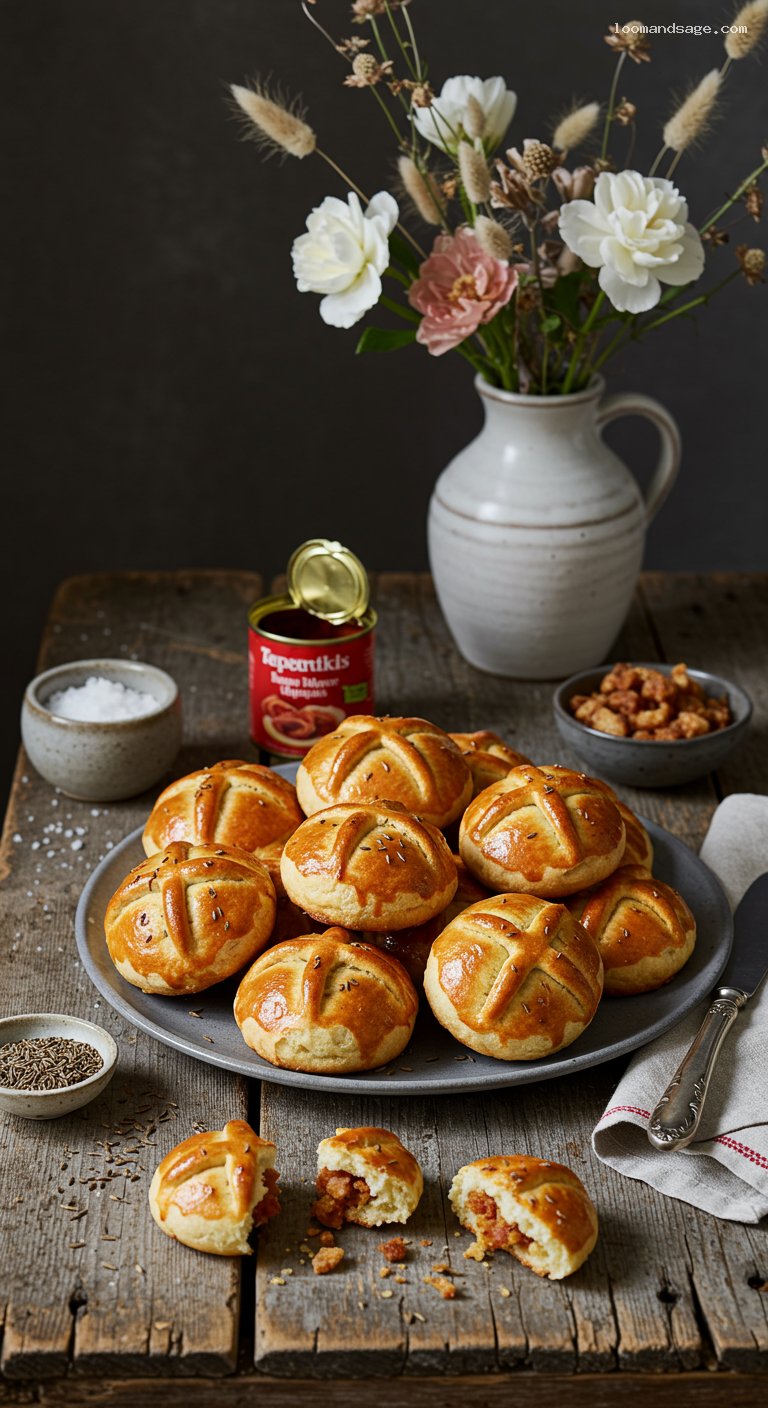
- 7. Roll 1.8 cm thick; score crosshatch; cut rounds; proof 25–30 min. Egg-wash, sprinkle caraway, bake 220°C/425°F (200°C/400°F fan) for 16–19 min.
Why You’ll Love This Recipe
- Classic Hungarian bakery flavor: savory, porky, and gently spiced with paprika and caraway.
- Flaky, tender layers from easy folds—no fussy pastry skills required.
- Great make-ahead: dough, filling, and even cut rounds freeze beautifully.
- Perfect warm snack with beer, wine, or a cozy cup of tea.
Grocery List
- Produce: 1 small onion, 2 garlic cloves
- Dairy: Whole milk, sour cream, eggs, unsalted butter (if not using lard)
- Pantry: Pork cracklings or pork belly/lardons, lard, all-purpose flour, instant yeast, fine sea salt, sugar, sweet Hungarian paprika, caraway seeds, black pepper
Full Ingredients
For the Dough
- 500 g all-purpose flour (about 4 cups)
- 7 g instant yeast (2 1/4 tsp)
- 10 g fine sea salt (1 3/4 tsp)
- 1 tsp sugar
- 200 ml whole milk, warmed to 110°F/43°C (about 3/4 cup + 1 tbsp)
- 1 large egg, room temperature
- 150 g full-fat sour cream, room temperature (2/3 cup)
- 100 g lard or unsalted butter, softened (7 tbsp)
For the Crackling Filling
- 200 g pork cracklings or very crisp lardons, roughly chopped (7 oz)
- 30 g lard (2 tbsp), softened
- 1 small onion (about 80 g), very finely grated
- 2 garlic cloves, finely grated (optional but delicious)
- 1 tsp sweet Hungarian paprika
- 1/2 tsp freshly ground black pepper
- 1/2 tsp caraway seeds, lightly crushed
- 1/4 tsp fine sea salt (adjust to taste if cracklings are very salty)
If Making Your Own Cracklings (Optional)
- 300 g pork belly, skin removed, cut into 1 cm lardons (10.5 oz)
- 50 ml water (3 tbsp) to start the rendering
For Finishing
- 1 large egg + 1 tbsp milk or water (egg wash)
- 1 tsp caraway seeds (for sprinkling)
- Flaky salt, to finish (optional)
Step-by-Step Instructions
Step 1: Make or Prepare the Cracklings
If using store-bought cracklings, chop them and set aside. To make your own, place the pork belly lardons and 50 ml water in a wide skillet over medium heat. Cook, stirring occasionally, until the water evaporates and the fat renders, then continue frying until the pieces are deeply golden and crisp, 20–25 minutes total. Drain on paper towels, cool completely, then chop.
Step 2: Blend the Crackling Filling
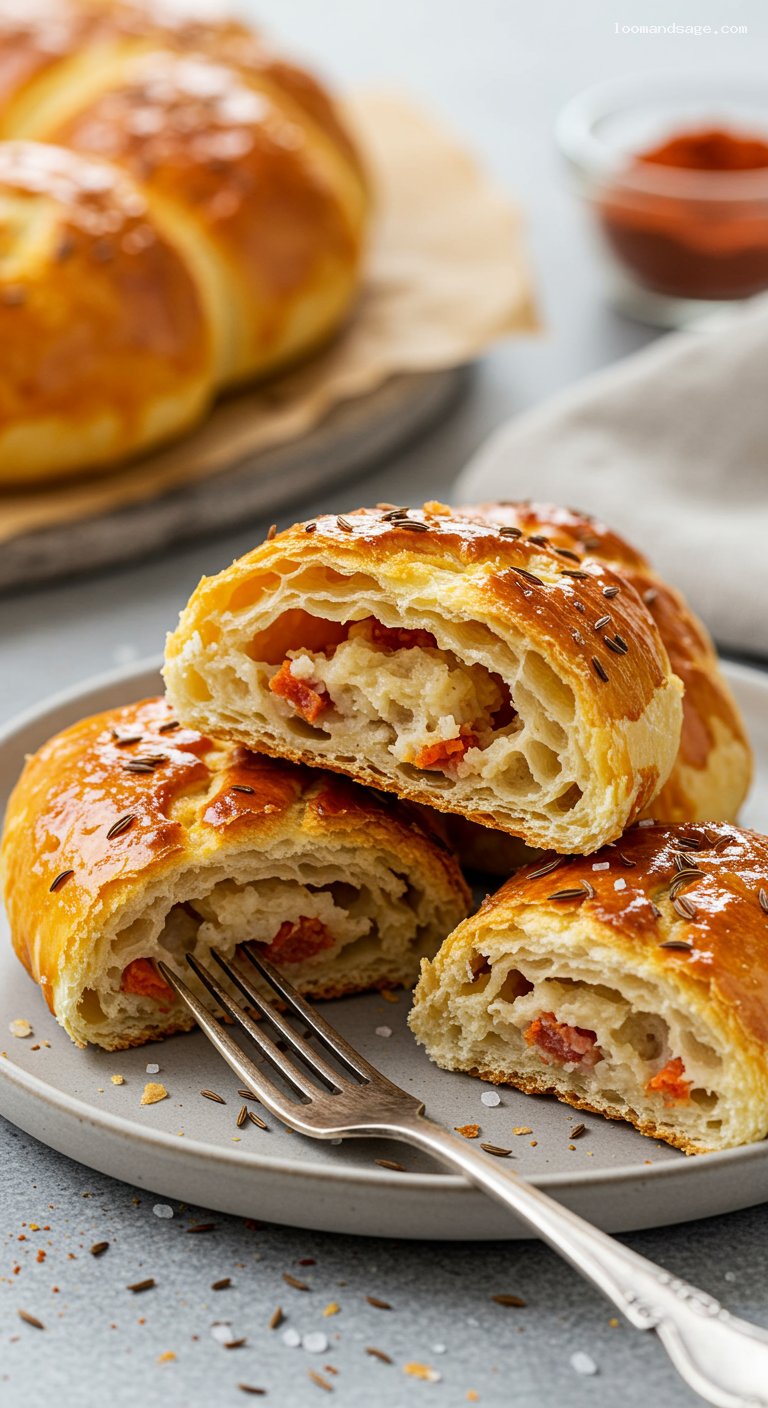
In a food processor, combine chopped cracklings, 30 g softened lard, grated onion, garlic, paprika, black pepper, crushed caraway, and 1/4 tsp salt. Pulse to a coarse, spreadable paste (small flecks of crackling should remain). Taste and adjust salt. Chill 10 minutes to firm slightly.
Step 3: Mix and Knead the Dough
In a large bowl (or stand mixer bowl), whisk together flour, instant yeast, sugar, and salt. In a separate bowl, whisk warm milk with the egg and sour cream. Add the liquid mixture and 100 g softened lard to the dry ingredients. Mix until a shaggy dough forms, then knead until smooth, soft, and only slightly tacky, 5–7 minutes by hand or 4–5 minutes on medium speed with a dough hook.
Step 4: First Rise and Chill
Cover the dough and let it rest at warm room temperature (75–80°F / 24–27°C) until slightly puffy, 45–60 minutes (it may not double). For easier rolling and cleaner layers, chill the dough, covered, for 15 minutes to firm it up.
Step 5: First Roll and Fold with Filling
On a lightly floured surface, roll the dough to a 35 × 25 cm (14 × 10 inch) rectangle. Spread half of the crackling paste evenly over the surface, going right to the edges. Fold the dough like a letter: bottom third up, top third down. Rotate 90 degrees, place on a tray, cover, and refrigerate 20 minutes.
Step 6: Second and Third Folds
Roll the dough out again to 35 × 25 cm. Spread the remaining crackling paste evenly. Fold in thirds as before, rotate, cover, and chill 20 minutes. For a final lamination, roll again to the same size without adding paste, fold in thirds one more time, then rest 20 minutes in the fridge. These three folds build flaky layers.
Step 7: Roll, Score, Cut, and Proof
Roll the dough to 1.8 cm (3/4 inch) thick. Using a sharp knife, lightly score a diagonal crosshatch across the surface, about 3–5 mm deep. Stamp out rounds with a 5 cm (2 inch) cutter, pushing straight down without twisting for clean lift. Stack scraps (do not knead) and re-roll once. Arrange rounds on parchment-lined sheets, spacing 2–3 cm apart. Cover and proof until slightly puffy, 25–30 minutes.
Step 8: Egg-Wash, Bake, and Serve
Preheat to 220°C/425°F (200°C/400°F fan) for at least 20 minutes. Whisk the egg with 1 tbsp milk for egg wash. Brush tops (avoid the sides to encourage rise), sprinkle with caraway seeds and a pinch of flaky salt. Bake 16–19 minutes until deeply golden, puffed, and crisp on the bottoms; rotate pans halfway if baking two trays. Cool 5 minutes and enjoy warm.
Pro Tips
- Keep it cool: brief chills between folds keep the fat distinct, creating better layers.
- Score before cutting: the crosshatch helps the tops bloom and gives the classic look.
- Do not twist the cutter: a straight down-and-up motion promotes taller lift.
- Salt check: cracklings vary—taste the filling before adding extra salt.
- Uniform thickness: aim for 1.8 cm so all pogácsa bake evenly and rise neatly.
Variations
- Cheese-crowned: after egg wash, shower with 40 g finely grated aged cheese (e.g., sharp cheddar or Pálpusztai-style hard cheese) before baking.
- Spicy paprika: swap half the sweet paprika for hot Hungarian paprika and add a pinch of chili flakes to the filling.
- Herb-kissed: fold 2 tbsp finely snipped chives or parsley into the final plain fold for fresh green flecks.
Storage & Make-Ahead
Store baked pogácsa airtight at room temperature up to 2 days; re-crisp at 180°C/350°F for 6–8 minutes. Freeze baked pogácsa up to 2 months; reheat from frozen at 180°C/350°F for 10–12 minutes. Make-ahead options: crackling filling keeps 3 days refrigerated; dough can rest (covered) in the fridge overnight after Step 4; shaped, unbaked rounds freeze on a sheet pan, then transfer to a bag—bake from frozen, adding 3–5 minutes.
Nutrition (per serving)
Approximate per pogácsa (1 of 30): 160 kcal; 10 g fat; 13 g carbohydrates; 4 g protein; 0.5 g fiber; 220 mg sodium. Values will vary based on cracklings and exact ingredients.