
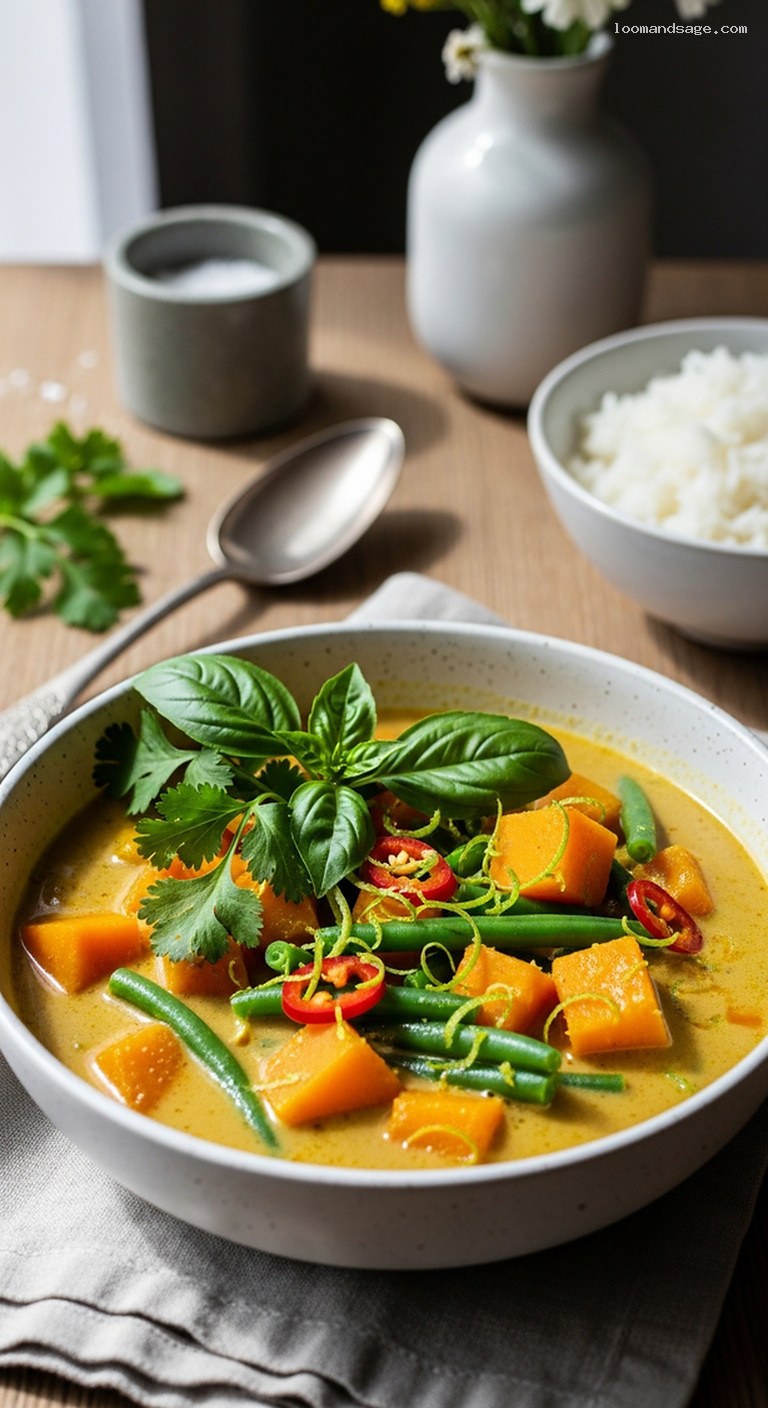
Quick Recipe Version (TL;DR)
Quick Ingredients
- 2 tbsp neutral oil (canola, sunflower, or avocado)
- 1 medium yellow onion, thinly sliced
- 3 cloves garlic, minced
- 1 tbsp fresh ginger, minced
- 2 stalks lemongrass, trimmed and lightly smashed
- 2–3 tbsp Thai green curry paste
- 4 cups peeled pumpkin or kabocha, 3/4-inch cubes (about 1.5 lb)
- 2 cups green beans, trimmed and cut in 1-inch pieces
- 1 can (13.5 oz / 400 ml) full-fat coconut milk
- 2 cups vegetable broth (low-sodium)
- 2 tbsp fish sauce or soy sauce (for vegan)
- 1–2 tsp brown sugar
- 2 tbsp fresh lime juice
- 1 tsp lime zest
- Fresh cilantro or Thai basil, sliced red chili, lime wedges (for serving)
- Cooked jasmine rice, for serving
Do This
- 1. Heat oil in a large pot over medium heat. Sauté onion 4–5 minutes until soft.
- 2. Add garlic, ginger, and lemongrass; cook 1 minute until fragrant. Stir in green curry paste.
- 3. Pour in coconut milk and vegetable broth. Add fish sauce or soy sauce and brown sugar; bring to a gentle simmer (about 90–95°C / 195–205°F).
- 4. Add pumpkin cubes, reduce heat to medium-low, and simmer 12–15 minutes until just tender.
- 5. Stir in green beans and cook 4–6 minutes until bright green and crisp-tender.
- 6. Remove lemongrass. Stir in lime juice and lime zest; taste and adjust salt, lime, or sugar.
- 7. Serve over hot jasmine rice and garnish with cilantro or Thai basil, sliced red chili, and lime wedges.
Why You’ll Love This Recipe
- Comforting, creamy coconut curry with bright lemongrass and lime for a fresh, tangy finish.
- Tender pumpkin and crisp-tender green beans give beautiful texture and color in every spoonful.
- Weeknight-friendly: ready in under an hour, mostly hands-off simmering.
- Easily adaptable: make it vegan, add protein, or adjust the heat to your taste.
Grocery List
- Produce: Pumpkin or kabocha squash, green beans, yellow onion, garlic, fresh ginger, lemongrass stalks, limes, optional Thai basil, cilantro, red chili, optional scallions.
- Dairy: None required (recipe is dairy-free). Optional: plain Greek yogurt or coconut yogurt for a cooling dollop.
- Pantry: Neutral oil, Thai green curry paste, canned full-fat coconut milk, vegetable broth, fish sauce or soy sauce, brown sugar, salt, jasmine rice.
Full Ingredients
Curry Base
- 2 tbsp neutral oil (canola, sunflower, or avocado)
- 1 medium yellow onion, thinly sliced
- 3 cloves garlic, minced
- 1 tbsp fresh ginger, minced (about a 1-inch piece)
- 2 stalks lemongrass, outer leaves removed, trimmed, and lightly smashed
- 2–3 tbsp Thai green curry paste (adjust to heat preference)
- 1 can (13.5 oz / 400 ml) full-fat coconut milk, well shaken
- 2 cups vegetable broth (preferably low-sodium)
- 2 tbsp fish sauce or low-sodium soy sauce/tamari for a vegetarian/vegan version
- 1–2 tsp light brown sugar, packed (to balance the lime and spice)
- 1 tsp fine sea salt, plus more to taste
Vegetables
- 4 cups peeled pumpkin or kabocha squash, cut into 3/4-inch cubes (about 1.5 lb prepared)
- 2 cups green beans, trimmed and cut into 1-inch pieces
Lemongrass-Lime Finish
- 2 tbsp fresh lime juice (from about 1 large lime)
- 1 tsp finely grated lime zest
For Serving
- 3–4 cups cooked jasmine rice (about 1 cup uncooked per 2 people)
- Fresh cilantro leaves, roughly chopped
- Fresh Thai basil or sweet basil leaves (optional but lovely)
- 1 fresh red chili (Thai, Fresno, or red jalapeño), thinly sliced, for heat and color
- Lime wedges, for squeezing at the table
- Optional: thinly sliced scallions, toasted peanuts or cashews for crunch
Optional Add-Ins
- 8 oz firm tofu, pressed and cubed, or 8 oz cooked chicken or shrimp, added with the green beans
- 1 small red bell pepper, sliced, added with the green beans
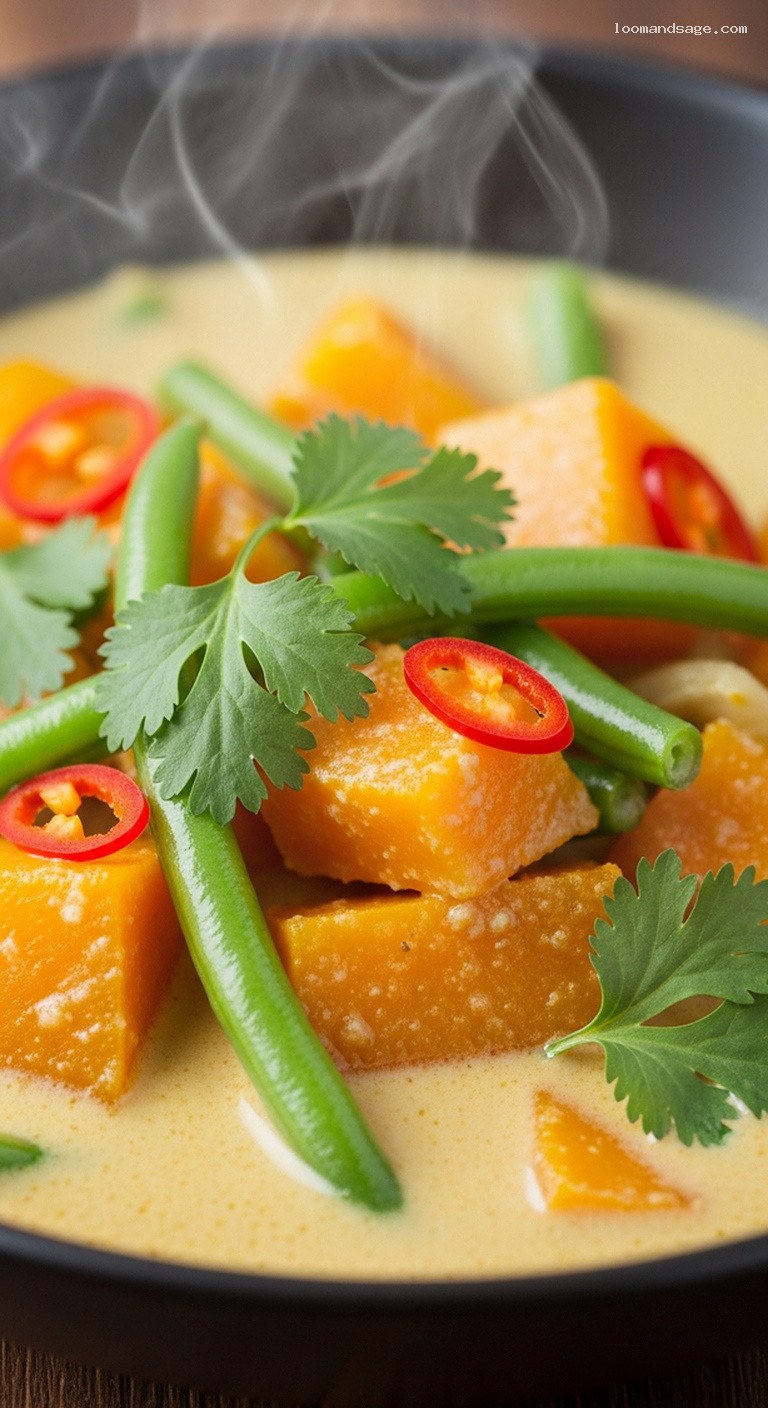
Step-by-Step Instructions
Step 1: Prep and organize your ingredients
Peel your pumpkin or kabocha squash, remove the seeds, and cut into 3/4-inch cubes. Measure out 4 cups and set aside. Trim the ends off the green beans and cut them into 1-inch pieces. Thinly slice the onion, mince the garlic and ginger, and prepare the lemongrass by removing the tough outer layers, trimming the root end, and lightly smashing each stalk with the back of a knife to release its oils. Shake the coconut milk can well to combine the cream and liquid. Have the curry paste, vegetable broth, fish sauce or soy sauce, and brown sugar ready near the stove. This bit of organization makes the cooking smooth and stress-free.
Step 2: Sauté the aromatics
In a heavy-bottomed pot or Dutch oven, heat the neutral oil over medium heat for about 1–2 minutes, until it shimmers. Add the sliced onion and a small pinch of salt. Cook, stirring occasionally, for 4–5 minutes, until the onion is soft and translucent with just a hint of golden color at the edges. Add the minced garlic, ginger, and the smashed lemongrass stalks. Cook for 1 minute, stirring constantly, until very fragrant but not browned. Stir in the Thai green curry paste and cook for another 1–2 minutes, mashing it into the onions so it toasts slightly and releases its flavor. If it starts to stick or brown too quickly, lower the heat.
Step 3: Build the lemongrass-infused coconut broth
Pour in the coconut milk and stir to dissolve the curry paste into the liquid. Add the vegetable broth, fish sauce or soy sauce, brown sugar, and 1 teaspoon of salt. Stir well. Increase the heat to medium-high and bring the mixture just up to a gentle simmer (small bubbles around the edges), then immediately reduce the heat to maintain a steady but gentle simmer at about 90–95°C / 195–205°F. Let the broth simmer for 3–4 minutes to allow the lemongrass and aromatics to infuse the liquid. Taste a spoonful and adjust the salt or curry paste if needed; remember that the flavors will continue to concentrate as the pumpkin cooks.
Step 4: Simmer the pumpkin until tender
Add the pumpkin cubes to the pot and stir so they are submerged in the broth. Keep the heat at a gentle simmer over medium-low to low; you want the pumpkin to cook through without boiling vigorously, which could make it fall apart. Cook uncovered for 12–15 minutes, stirring occasionally, until the pumpkin is just tender when pierced with the tip of a knife but still holds its shape. If the liquid reduces more than you like, add a splash of broth or water to keep a soup-like curry consistency.
Step 5: Add the green beans (and any quick-cooking add-ins)
Once the pumpkin is nearly tender, add the green beans and stir them into the curry. If you are adding quick-cooking vegetables like sliced red bell pepper or a pre-cooked protein (such as cooked chicken, shrimp, or tofu), add them now as well. Continue to simmer for 4–6 minutes, just until the green beans are bright green and crisp-tender. Taste the broth and adjust seasoning, adding a bit more fish sauce or soy sauce for saltiness or a pinch more sugar if the lime you will add later is very tart.
Step 6: Finish with lime and remove the lemongrass
Turn the heat down to low. Use tongs or a spoon to remove and discard the lemongrass stalks. Stir in the lime juice and lime zest. Taste the curry carefully: you are looking for a balance of savory, creamy, tangy, and gently sweet. Add more lime juice 1 teaspoon at a time if you prefer it brighter, or a pinch more salt or fish sauce/soy sauce if it needs more depth. If the curry is spicier than you like, you can mellow it slightly by adding a few extra tablespoons of coconut milk or a small splash of water.
Step 7: Serve and garnish
Spoon hot jasmine rice into bowls. Ladle the pumpkin coconut curry over or around the rice so you get a mix of pumpkin cubes, green beans, and plenty of broth in each serving. Garnish generously with chopped cilantro and Thai basil leaves, and sprinkle with sliced red chili for color and heat if you like. Offer lime wedges at the table so everyone can brighten their bowl to taste. Serve immediately while steaming hot, enjoying the contrast of creamy coconut, tender pumpkin, crunchy beans, and fragrant lemongrass-lime broth.
Pro Tips
- Use flavorful pumpkin: Sugar pumpkin or kabocha squash works best; avoid stringy carving pumpkins. Kabocha holds its shape particularly well and has a naturally sweet, chestnut-like flavor.
- Control the heat level: Start with 2 tablespoons of curry paste; after the broth simmers, taste and add up to 1 extra tablespoon if you want more spice and depth.
- Do not overcook the pumpkin: Check it early; once the cubes are just tender, move on. Overcooked pumpkin will start to break down and turn the curry mushy.
- Maximize lemongrass flavor: Smashing the stalks and simmering them whole gives you lots of aroma without tough fibers. Always remove them before serving.
- Balance the flavors at the end: The last-minute addition of lime juice and zest is key. Taste, then adjust lime, salt/fish sauce, and sugar in tiny amounts until it tastes alive and rounded.
Variations
- Roasted pumpkin version: Toss the pumpkin cubes with 1 tbsp oil and 1/2 tsp salt, then roast on a baking sheet at 400°F / 200°C for 20–25 minutes until golden at the edges. Add the roasted pumpkin in Step 5 with the green beans for deeper caramelized flavor and firmer texture.
- Protein-packed: Stir in cubes of pan-seared tofu, shredded rotisserie chicken, or quickly sautéed shrimp during Step 5. Simmer just until heated through to avoid overcooking.
- Extra green and veggie-heavy: Add a couple of handfuls of baby spinach or chopped kale in the last 2 minutes of cooking, letting the leaves wilt into the curry for more color and nutrients.
Storage & Make-Ahead
Let the curry cool to room temperature, then transfer to airtight containers. Refrigerate for up to 4 days. Reheat gently on the stovetop over low to medium-low heat, stirring occasionally, until steaming but not boiling; add a splash of water or broth if it has thickened. The flavors often deepen by the next day. For freezing, cool completely and freeze for up to 2 months. Thaw overnight in the refrigerator before reheating. Note that the green beans will lose some crispness after freezing; if you plan to freeze, consider undercooking them slightly or adding fresh blanched green beans when reheating. Cooked jasmine rice keeps in the refrigerator for up to 4 days; reheat covered with a damp paper towel in the microwave, or steam briefly with a tablespoon of water.
Nutrition (per serving)
Approximate values per serving (without rice, based on 4 servings): 350–400 calories; 7–9 g protein; 25–30 g fat (mostly from coconut); 30–35 g carbohydrates; 6–8 g fiber; 10–12 g sugars; 650–800 mg sodium (varies with broth and fish sauce/soy sauce). Serving with 1 cup cooked jasmine rice adds about 200 calories, 4 g protein, and 45 g carbohydrates.