Quick Recipe Version (TL;DR)
Quick Ingredients
- 1 medium green cabbage (1.6–1.8 kg / 3.5–4 lb)
- 36 g non-iodized fine sea salt (about 2 level Tbsp), or 3 Tbsp kosher salt
- 1–2 tsp caraway seeds (optional, traditional)
- Filtered water (only if extra brine is needed)
Do This
- 1. Remove outer cabbage leaves, set 1–2 clean leaves aside. Quarter and finely shred the rest (about 2–3 mm wide).
- 2. Weigh shredded cabbage and mix with salt (2% of cabbage weight). Toss very well and let sit 10–15 minutes.
- 3. Massage cabbage firmly with clean hands until it softens and releases plenty of brine (5–10 minutes). Mix in caraway if using.
- 4. Pack cabbage tightly into a clean 1.5–2 L jar, pressing down firmly so brine rises to cover. Leave at least 5 cm / 2 in headspace.
- 5. Cover cabbage with a reserved leaf and a fermentation weight. Ensure everything stays submerged under brine. Cover jar with a loose lid or cloth.
- 6. Ferment at cool room temperature (18–22°C / 65–72°F) for 5–21 days. Check daily, keeping cabbage submerged and tasting from day 5 onward. When pleasantly sour and slightly fizzy, refrigerate.
Why You’ll Love This Recipe
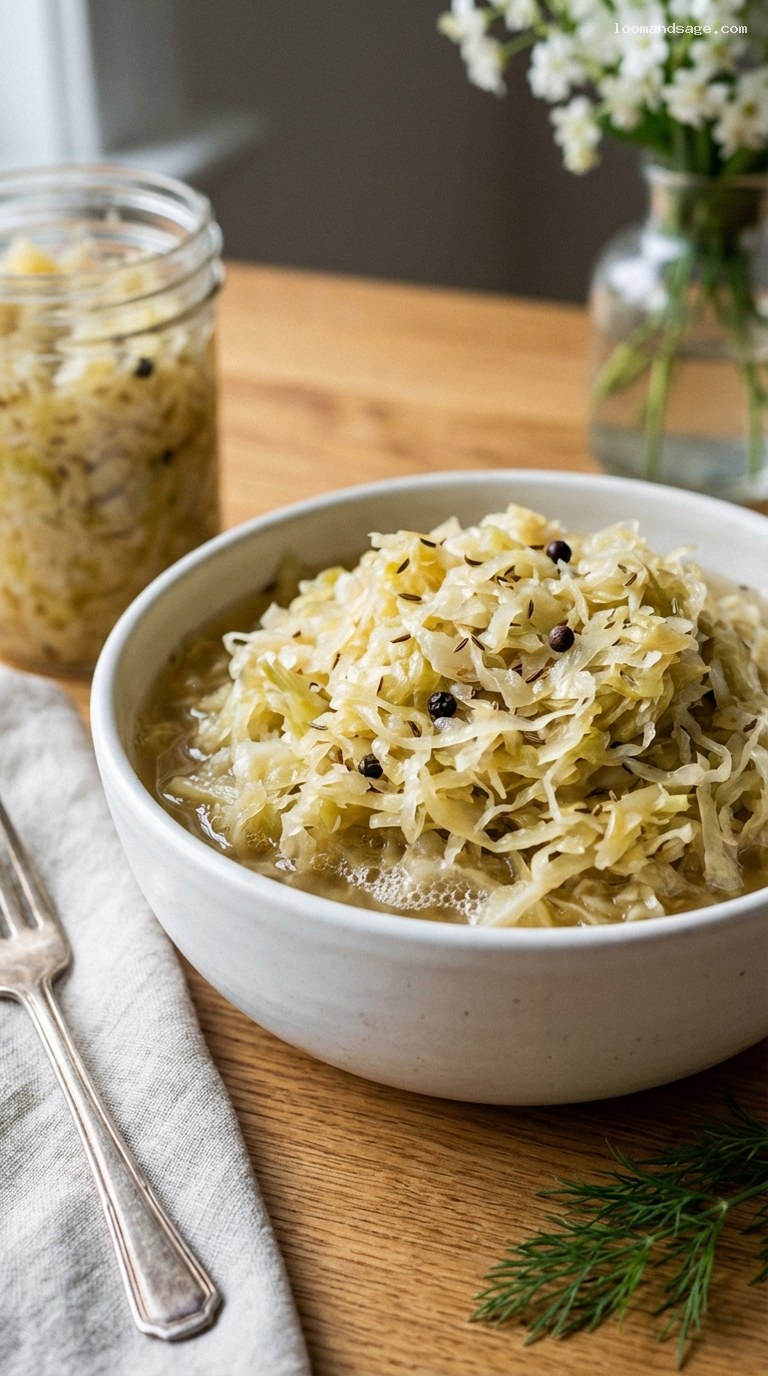
- Classic, simple ingredients: just cabbage, salt, and an optional hint of caraway.
- Easy, low-effort fermentation: only minutes of hands-on work, then time does the rest.
- Bright, tangy flavor that pairs beautifully with sausages, sandwiches, and hearty stews.
- Naturally fermented and probiotic-rich, with a satisfying crunch and light effervescence.
Grocery List
- Produce: 1 medium green cabbage (firm and heavy for its size); optional: 1 small carrot, 1 small tart apple, 1–2 cloves garlic.
- Dairy: None.
- Pantry: Non-iodized fine sea salt or pickling/kosher salt, caraway seeds (optional but classic), whole black peppercorns (optional), juniper berries (optional), bay leaf (optional), filtered water.
Full Ingredients
For the Basic Sauerkraut (about 1.5 quarts / 1.4 liters)
- 1 medium green cabbage (1.6–1.8 kg / 3.5–4 lb), firm and dense
- 36 g non-iodized fine sea salt (2% of cabbage weight; about 2 level Tbsp)
- OR 3 level Tbsp kosher salt (if using a coarser grain)
- Filtered water, as needed only if extra brine is required
Optional Traditional Flavorings
- 1–2 tsp caraway seeds
- 1 tsp juniper berries, lightly crushed
- 6–8 whole black peppercorns
- 1 small bay leaf
Optional Add-Ins (for Variations)
- 1 small carrot, peeled and cut into fine matchsticks or shredded
- 1 small tart apple (such as Granny Smith), peeled, cored, and shredded
- 1–2 cloves garlic, thinly sliced
Equipment (Helpful but Mostly Basic)
- Digital kitchen scale (strongly recommended for weighing cabbage and salt)
- Large mixing bowl (non-reactive: glass, stainless steel, or ceramic)
- Sharp chef’s knife or mandoline slicer
- Cutting board
- 1 wide-mouth glass jar, 1.5–2 liters (or 2 x 1-liter jars)
- Fermentation weight, small clean jar, or a zip-top bag filled with brine (to weigh down the cabbage)
- Clean cloth and rubber band, or a lid that can be left slightly loose
Step-by-Step Instructions
Step 1: Clean and Prepare Your Equipment
Wash your jar, bowl, knife, and any tools you will use in hot soapy water, then rinse very well. They do not need to be sterilized like for canning, but they should be scrupulously clean. Allow them to air-dry or dry with a clean towel.
Make sure you are using non-reactive materials: glass, ceramic, wood, or stainless steel. Avoid aluminum or copper, which can react with the salt and acids.
Step 2: Core and Shred the Cabbage
Remove any wilted or damaged outer cabbage leaves and discard them. Peel off 1–2 clean, unblemished outer leaves and set them aside; you will use these later as a “cabbage cap” to keep the shreds submerged.
Cut the cabbage into quarters through the core. Cut out the hard core from each quarter. With a sharp knife or mandoline, slice the cabbage into very thin shreds, about 2–3 mm wide (roughly 1/8 inch). Thinner shreds will soften and ferment more evenly while still staying pleasantly crisp.
Transfer the shredded cabbage to a large mixing bowl as you go.
Step 3: Salt the Cabbage and Massage to Draw Out Brine
If you have a kitchen scale, weigh the shredded cabbage and calculate 2% salt by weight (for 1.7 kg cabbage, use 34 g salt). If not, use the guideline: for a medium 1.6–1.8 kg (3.5–4 lb) cabbage, use about 36 g fine sea salt (2 level Tbsp) or 3 level Tbsp kosher salt.
Sprinkle the salt evenly over the cabbage in the bowl. Toss with your hands to coat thoroughly, lifting and turning the shreds so the salt is well distributed. Let the salted cabbage rest for 10–15 minutes. During this time, the salt will begin drawing out moisture.
After resting, firmly massage and squeeze the cabbage with clean hands. Grasp big handfuls, squeeze, and press down into the bowl. Continue for 5–10 minutes, until the cabbage has softened noticeably and you see a generous puddle of brine at the bottom of the bowl. The cabbage should feel slightly wilted but still springy. If using caraway seeds or other dry spices (peppercorns, juniper, bay leaf), mix them in now.
Step 4: Pack the Cabbage Firmly into the Jar
Place a small handful of cabbage into the bottom of your clean jar. Use your fist, a clean tamper, or the handle-end of a wooden spoon to press the cabbage down very firmly, compacting it and forcing out air pockets. Continue adding cabbage a handful at a time, packing and pressing after each addition.
As you pack, brine should rise up over the cabbage. Scrape any remaining liquid from the bowl into the jar. Leave about 5 cm (2 inches) of headspace at the top to allow for expansion during fermentation.
If, after very firm packing, the brine does not cover the cabbage by at least 1–2 cm (1/2 inch), make a small batch of brine: dissolve 1 level tsp salt in 250 ml (1 cup) filtered water. Add just enough to cover the cabbage completely. Do not use plain water; it will dilute the salt concentration too much.
Step 5: Add a Cabbage Cap, Weight, and Cover
Fold one of the reserved outer cabbage leaves to roughly fit into the mouth of the jar. Press it down over the shredded cabbage as a “cap.” This helps keep fine shreds from floating above the brine.
Place a fermentation weight, a small clean jar, or a sealed zip-top bag filled with brine on top of the cabbage leaf. The goal is to keep all cabbage submerged below the surface of the brine; anything exposed to air is where mold could grow.
Wipe the rim of the jar clean. Cover the jar with a clean cloth secured with a rubber band, or use a lid set on loosely so gases can escape. Do not fully tighten a regular lid at this stage; carbon dioxide needs somewhere to go as fermentation starts.
Step 6: Ferment at Cool Room Temperature
Place the jar on a plate or tray to catch any overflow and set it in a cool, dark spot at room temperature, ideally 18–22°C (65–72°F). Avoid placing it in direct sunlight or near a warm stove.
For the first few days, you will likely see bubbles rising, and the brine may become cloudy. This is normal and a good sign. Once a day, briefly open the jar (if using a lid) to let gases escape (“burping”), then close it again. Check that the cabbage remains fully submerged; if any strands float up, push them back down under the brine.
If a thin white film forms on the surface, it is likely harmless yeast (kahm yeast). Skim it off gently. However, if you see fuzzy mold that is blue, black, pink, or strongly colored, or if it smells truly rotten rather than pleasantly sour, discard the batch and start again.
Step 7: Taste, Adjust Fermentation Time, and Store
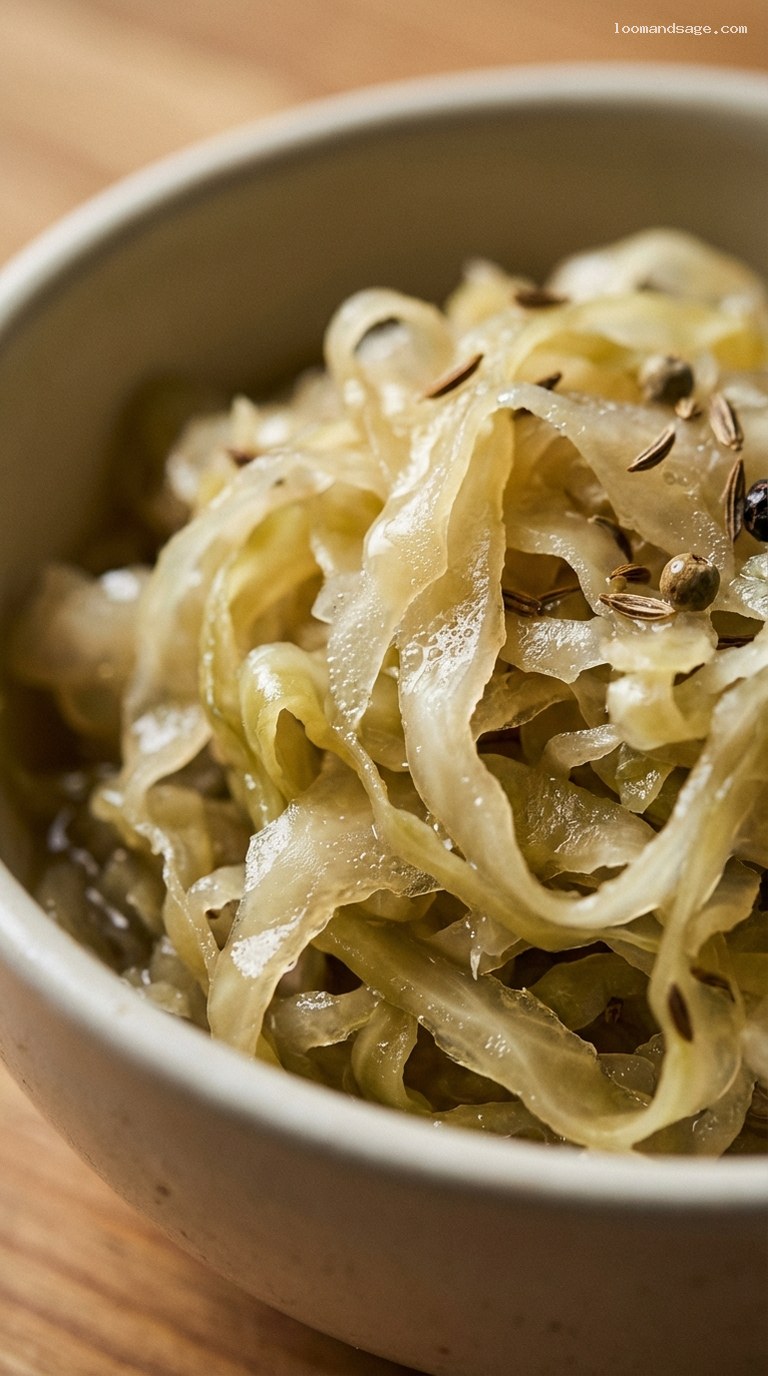
Begin tasting the sauerkraut after about 5 days. Use a clean utensil to remove a small amount from below the surface, then re-cover promptly. Early on, it will taste lightly tangy and still quite salty. Over time, it becomes more sour, complex, and slightly effervescent, with a softer texture that still has crunch.
Fermentation time depends on temperature and your taste. At 20°C (68°F), many people enjoy sauerkraut between 7 and 14 days; in a cooler kitchen, it can take up to 3 weeks. Once the flavor is pleasantly sour, aromatic, and slightly fizzy to your liking, remove the weight and cabbage leaf cap, screw on a regular lid, and transfer the jar to the refrigerator.
Refrigeration dramatically slows fermentation. The sauerkraut will keep developing flavor more slowly, remaining good for several months. For serving, use a clean fork or tongs to remove what you need, keeping the rest submerged in its brine.
Pro Tips
- Weigh your cabbage and salt. Using 2% salt by weight (20 g salt per 1 kg cabbage) gives the most reliable, safe, and consistent results.
- Keep everything submerged. Fermented foods are safe and delicious when they stay under brine. Above the brine is where mold and off-flavors can develop.
- Choose the right jar size. The cabbage should fill the jar well after packing, but still leave about 5 cm (2 inches) of headspace for expansion.
- Control temperature. Cooler, steady temperatures (18–22°C / 65–72°F) yield the best flavor and texture. Very warm rooms can cause soft, overly sour kraut.
- Let your taste guide you. There is no single “correct” fermentation time. Stop when the balance of salt, tang, and crunch feels just right to you.
Variations
- Classic Caraway Sauerkraut: Add 1–2 tsp caraway seeds during Step 3. This is a very traditional Central European flavor that pairs beautifully with sausages and rye bread.
- Bavarian-Inspired Apple & Carrot Kraut: During Step 3, mix in 1 small shredded carrot and 1 small shredded tart apple, plus 1 tsp caraway seeds. This produces a mellow, slightly fruity kraut that is wonderful with roast pork.
- Garlic & Peppercorn Kraut: Add 1–2 thinly sliced garlic cloves and 6–8 whole black peppercorns along with the salt in Step 3. The garlic softens and mellows during fermentation, giving a fragrant, savory sauerkraut.
Storage & Make-Ahead
Once the sauerkraut has reached your preferred level of sourness, store it in the refrigerator in its brine with a tight-fitting lid. Properly fermented and kept cold, it will stay good for at least 3 months and often up to 6 months or longer. For the best texture and flavor, try to enjoy it within the first 3–4 months.
Always use clean utensils when removing sauerkraut from the jar, and ensure the remaining cabbage stays submerged under the brine. If the brine level drops over time, you can top up with a little 2% brine (1 tsp salt dissolved in 250 ml / 1 cup filtered water). If you ever notice an off smell, strange colors, or fuzzy mold, it is safest to discard and start a fresh batch.
Nutrition (per serving)
Approximate values per 1 serving (about 40 g / 1/4 cup undrained homemade sauerkraut): about 10–15 kcal, 0 g fat, 2–3 g carbohydrates, 1–2 g fiber, 1 g protein, and approximately 250–350 mg sodium (will vary with fermentation time and exact salt amount). Naturally contains lactic acid bacteria from fermentation, though exact probiotic content cannot be precisely calculated at home.