
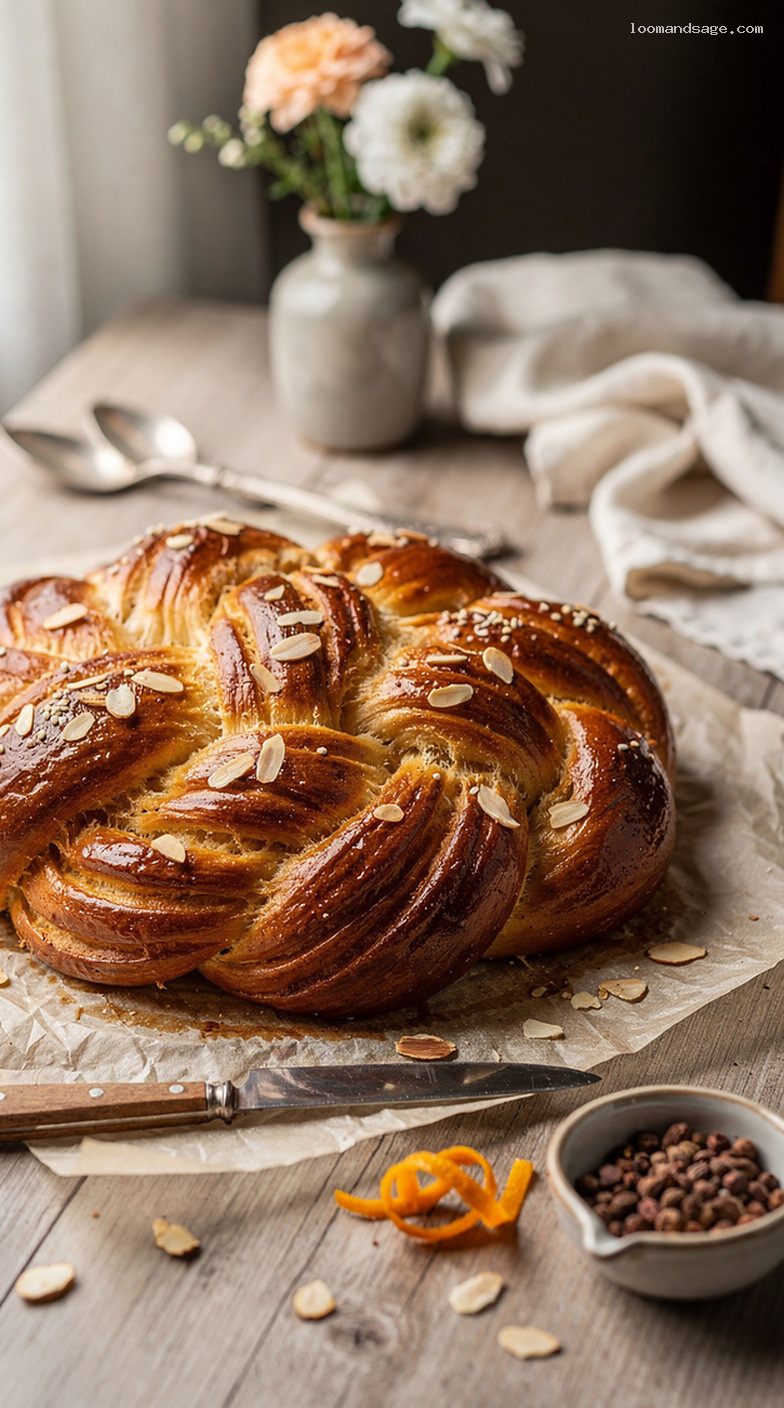
Quick Recipe Version (TL;DR)
Quick Ingredients
- 240 g (1 cup) whole milk, warmed to 43°C/110°F
- 7 g (2 1/4 tsp) instant yeast (or active dry)
- 500 g (4 cups) bread flour
- 100 g (1/2 cup) granulated sugar
- 10 g (1 3/4 tsp) fine salt
- 2 tsp ground mahleb
- 1/4 tsp ground mastic (optional)
- 2 tbsp finely grated orange zest
- 2 large eggs
- 85 g (6 tbsp) unsalted butter, very soft
- Egg wash: 1 egg + 15 g (1 tbsp) milk
- Optional topping: 30 g (1/4 cup) sliced almonds or sesame seeds
Do This
- 1. Warm milk to 43°C/110°F; mix with yeast and a spoonful of sugar; rest 5–10 minutes.
- 2. Mix flour, remaining sugar, salt, mahleb, mastic (optional), and orange zest; add eggs and yeast-milk.
- 3. Knead 8–12 minutes, then knead in soft butter a little at a time until smooth and stretchy.
- 4. Let rise, covered, until doubled (60–90 minutes at 24°C/75°F).
- 5. Divide into 3 ropes, braid, and place on a lined sheet; proof until puffy (45–60 minutes).
- 6. Brush with egg wash, add almonds (optional), bake at 175°C/350°F for 30–35 minutes (internal temp 88–90°C/190–194°F); cool 1 hour.
Why You’ll Love This Recipe
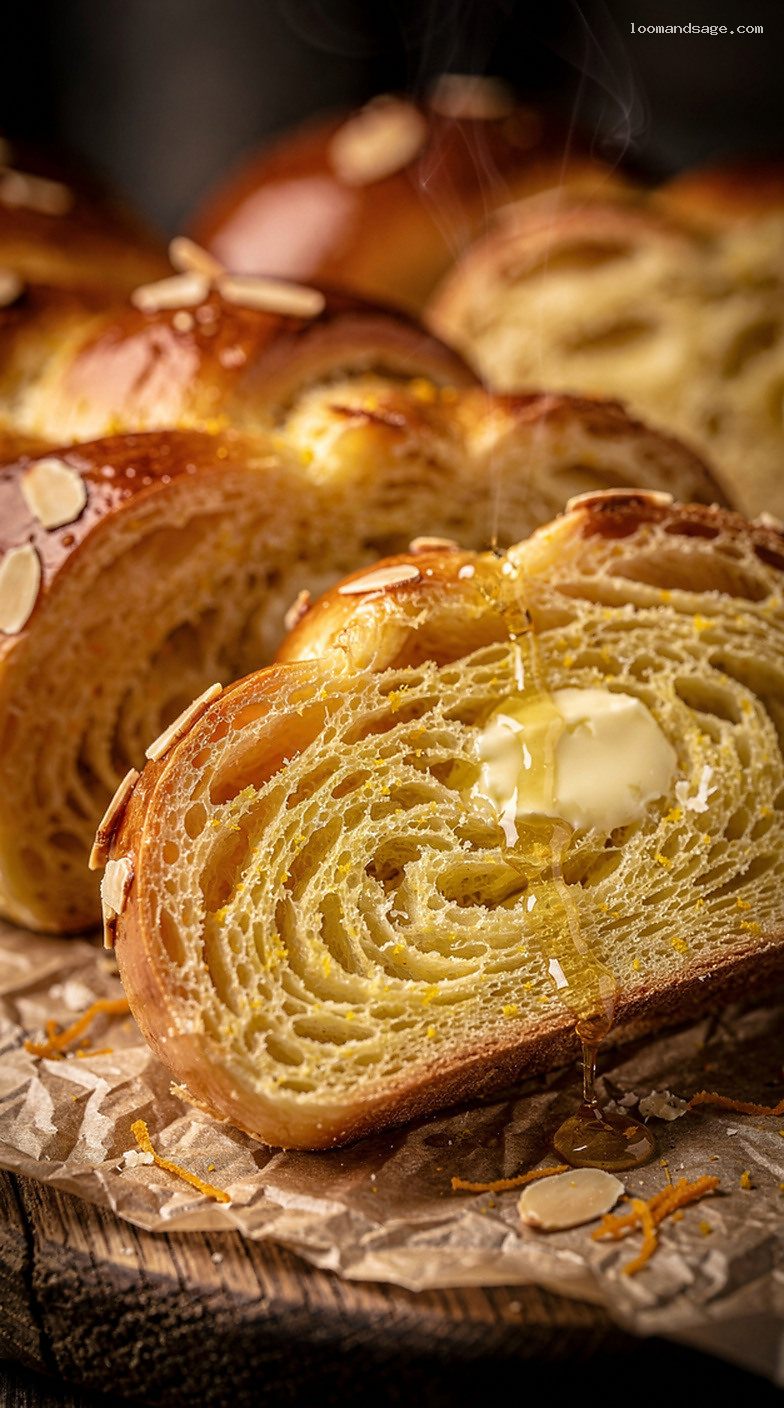
- Soft, fluffy, and beautifully aromatic from orange zest, mahleb, and optional mastic.
- A glossy, bakery-style braided loaf that looks impressive but is very doable at home.
- Stays tender for days and makes incredible toast and French toast.
- Classic flavor with room for simple add-ins (almonds, sesame, chocolate, or a traditional red egg).
Grocery List
- Produce: 2 oranges (for zest)
- Dairy: whole milk, unsalted butter
- Pantry: bread flour, granulated sugar, instant yeast (or active dry), fine salt, mahleb, mastic (optional), vanilla extract (optional), sliced almonds or sesame seeds (optional)
- Optional (for serving): honey, jam, powdered sugar, cinnamon (if making French toast later)
Full Ingredients
For the Tsoureki Dough
- Whole milk: 240 g (1 cup), warmed to 43°C/110°F
- Yeast: 7 g (2 1/4 tsp) instant yeast (or active dry yeast)
- Bread flour: 500 g (4 cups), plus extra for dusting
- Granulated sugar: 100 g (1/2 cup)
- Fine salt: 10 g (1 3/4 tsp)
- Ground mahleb: 2 tsp
- Ground mastic (optional): 1/4 tsp (see note in steps for grinding)
- Orange zest: 2 tbsp, finely grated (from about 2 oranges)
- Eggs: 2 large (about 100 g without shells), room temperature if possible
- Unsalted butter: 85 g (6 tbsp), very soft (not melted)
- Vanilla extract (optional): 1 tsp
For the Egg Wash and Topping
- Egg: 1 large
- Milk: 15 g (1 tbsp)
- Pinch of salt: optional, helps break up the egg for a smoother wash
- Sliced almonds (optional): 30 g (1/4 cup), or substitute sesame seeds
Step-by-Step Instructions
Step 1: Warm the milk and activate the yeast
Warm the milk to 43°C/110°F (it should feel warm but not hot). Pour it into a large mixing bowl or the bowl of a stand mixer. Add the yeast and 1 teaspoon of the sugar (just pinch it from your measured sugar).
Let stand for 5–10 minutes. You’re looking for a lightly foamy surface or a “cloudy” look that tells you the yeast is awake. (If you’re using instant yeast, this step is still helpful for confidence, though it may foam less.)
Step 2: Combine the dry flavor base (including mahleb and mastic)
In a separate bowl, whisk together the bread flour, remaining sugar, salt, ground mahleb, and orange zest.
If using mastic: mastic can be a bit sticky. For easier mixing, crush it to a fine powder before adding. A simple home method is to grind it with a teaspoon of the measured sugar using a mortar and pestle (or place it in a small zip-top bag and crush with a rolling pin, then rub with sugar to help keep it from clumping). Add the ground mastic to the flour mixture.
Step 3: Mix into a shaggy dough, then knead until elastic
Add the eggs (and vanilla, if using) to the yeast-milk mixture and whisk briefly to combine.
Add the flour mixture. Mix with a sturdy spoon until a rough dough forms, or use a stand mixer fitted with a dough hook on low speed until no dry flour remains.
Knead until the dough starts to become elastic: 8–10 minutes by stand mixer on medium-low speed, or 10–12 minutes by hand on a lightly floured counter. The dough should be soft and slightly tacky but not wet.
Step 4: Knead in the butter gradually for a silky, enriched dough
With the mixer running on medium-low (or while kneading by hand), add the very soft butter 1 tablespoon at a time, waiting until each addition is mostly absorbed before adding the next. This can take 4–6 minutes.
Continue kneading for another 3–5 minutes, until the dough is smooth, shiny, and stretchy. A good sign: you can pull off a small piece and stretch it thin enough to see light through it without tearing quickly (a “windowpane”).
Step 5: First rise (bulk fermentation) until doubled
Shape the dough into a ball and place it in a lightly buttered bowl. Cover tightly (lid, wrap, or a damp towel).
Let rise at a warm room temperature (about 24°C/75°F) until doubled, 60–90 minutes. If your kitchen is cooler, it may take closer to 2 hours.
Step 6: Divide, roll three strands, and braid
Line a large baking sheet with parchment paper.
Turn the dough out onto a clean work surface. Divide into 3 equal pieces (about 315 g each, if you want to be exact). Cover the pieces with a towel and rest for 10 minutes to relax the gluten (this makes rolling much easier).
Roll each piece into a rope about 40–45 cm (16–18 inches) long. If the dough keeps springing back, let it rest for 5 minutes, then continue.
Place the three ropes side by side, pinch them together at the top, and braid like you would braid hair. Tuck both ends under for a neat finish. Transfer the braid to the prepared baking sheet.
Step 7: Second rise until puffy, then egg wash
Cover the shaped loaf loosely with lightly greased plastic wrap (so it doesn’t stick) or a clean towel. Let it rise until noticeably puffy and lighter, 45–60 minutes. It won’t necessarily double, but it should look inflated and airy.
Meanwhile, preheat the oven to 175°C/350°F with a rack in the middle.
Make the egg wash by whisking together the egg, milk, and (optional) pinch of salt until very smooth. Brush the loaf gently all over, trying not to press down and deflate it. If using, sprinkle with sliced almonds or sesame seeds.
Step 8: Bake until deep golden and glossy, then cool completely
Bake at 175°C/350°F for 30–35 minutes, until the loaf is a deep golden brown and the center reads 88–90°C/190–194°F on an instant-read thermometer.
If the top browns too quickly, loosely tent with foil for the last 10 minutes of baking.
Cool on a wire rack for at least 1 hour before slicing. Tsoureki continues setting as it cools, and slicing too early can make it gummy.
Pro Tips
- Use bread flour for the best “stringy” pull. Tsoureki is known for its shreddable, stretchy crumb; bread flour helps create that structure.
- Add butter slowly. Rushing this step can leave you with a greasy dough that struggles to develop gluten.
- Watch the dough, not the clock. Rising times vary with temperature. Aim for doubled dough on the first rise and a visibly puffy braid on the second.
- For extra shine: apply a second light coat of egg wash right before baking (after the first coat has soaked in for 5 minutes).
- For neat braids: measure the strands, braid loosely (not tight), and tuck ends under to prevent unraveling.
Variations
- Traditional Easter style: nest a dyed red hard-boiled egg in the center of the braid before the second rise (press it in gently). Bake as directed.
- Chocolate tsoureki: knead in 170 g (1 cup) chocolate chips at the end of kneading, just until distributed.
- Orange-almond twist: add 1/2 tsp almond extract and finish with sliced almonds and a light dusting of powdered sugar after cooling.
Storage & Make-Ahead
Room temperature: Store the cooled loaf tightly wrapped (plastic wrap or in an airtight bag) at room temperature for up to 3 days. Tsoureki is best on days 1–2, then it becomes perfect for toasting.
Freezing: Slice the loaf, wrap well, and freeze for up to 2 months. Toast slices from frozen, or thaw at room temperature still wrapped.
Make-ahead option (overnight rise): After kneading (before the first rise), cover the dough tightly and refrigerate for 8–12 hours. The next day, let it sit at room temperature for 60–90 minutes (until it starts to puff), then shape, proof, and bake as directed.
French toast tip: Slightly stale tsoureki makes exceptional French toast. Slice thick, soak briefly, and cook in butter until deeply golden.
Nutrition (per serving)
Approximate per slice (1/12 loaf): 290 calories, 8 g protein, 45 g carbs, 9 g fat, 4 g saturated fat, 12 g sugar, 320 mg sodium, 1 g fiber. (Values vary by brands and exact slice size.)