Quick Recipe Version (TL;DR)
Quick Ingredients
- 4 large russet potatoes (about 10 oz / 280 g each)
- 2 tbsp olive oil, divided
- 1½ cups small broccoli florets
- 1 cup cooked chickpeas, rinsed and drained
- 3 green onions, thinly sliced (divided for filling + garnish)
- 1 cup raw cashews, soaked
- ¾ cup unsweetened non-dairy milk or water
- 3 tbsp nutritional yeast
- 2 tbsp lemon juice
- 1 small garlic clove
- 1 tsp Dijon mustard
- ½ tsp fine sea salt, plus more to taste
- ½ tsp smoked paprika + ¼ tsp ground cumin
- Black pepper, optional red pepper flakes for serving
Do This
- 1. Soak cashews in hot water for 20 minutes. Preheat oven to 400°F (200°C).
- 2. Scrub, dry, and pierce potatoes; rub with 1 tbsp oil and salt. Bake 45–55 minutes until tender.
- 3. Steam broccoli 3–4 minutes until bright green and crisp-tender. Roughly chop. Prep chickpeas and green onions.
- 4. Blend soaked cashews, non-dairy milk, nutritional yeast, lemon juice, garlic, mustard, salt, and pepper into a smooth cashew “cheese” sauce.
- 5. Sauté chickpeas and broccoli in 1 tbsp oil with smoked paprika, cumin, salt, and pepper. Stir in most of the green onions.
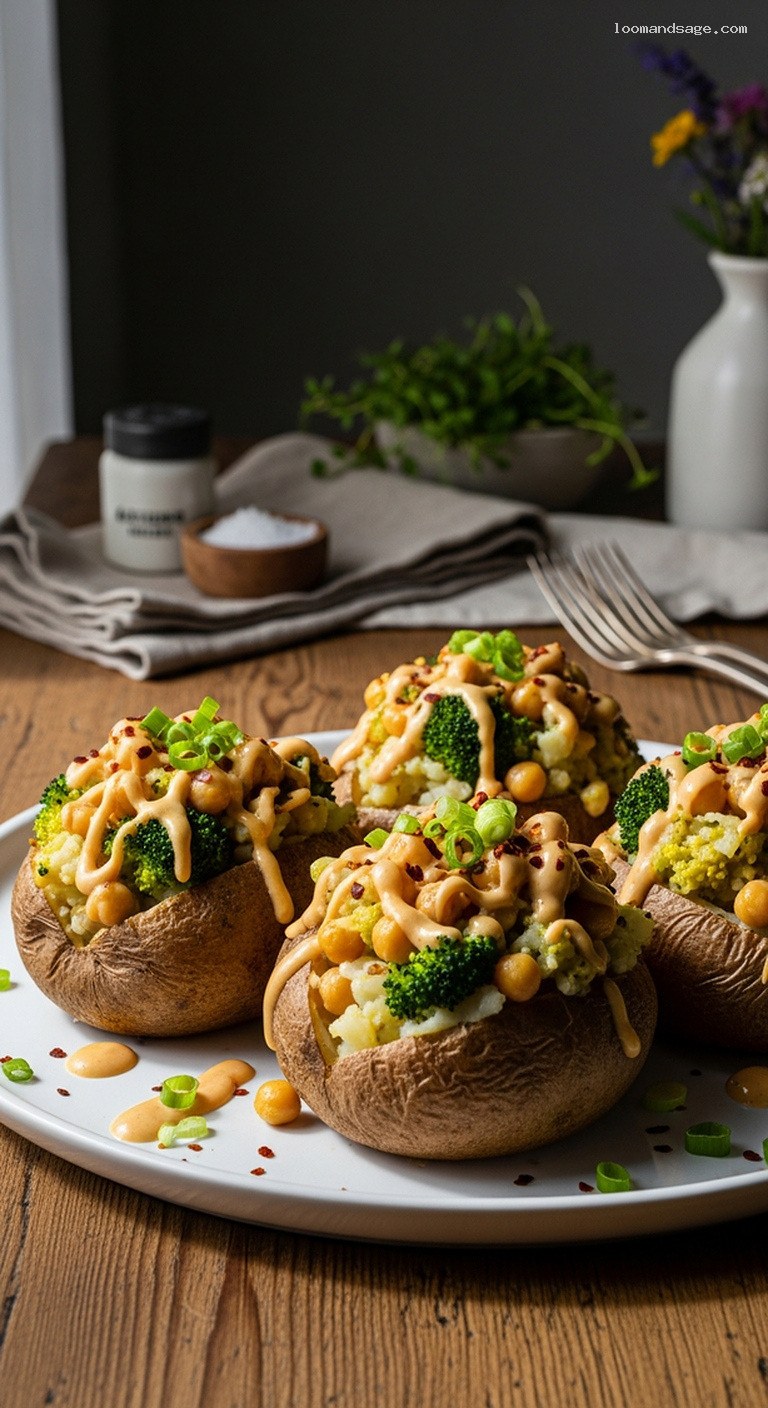
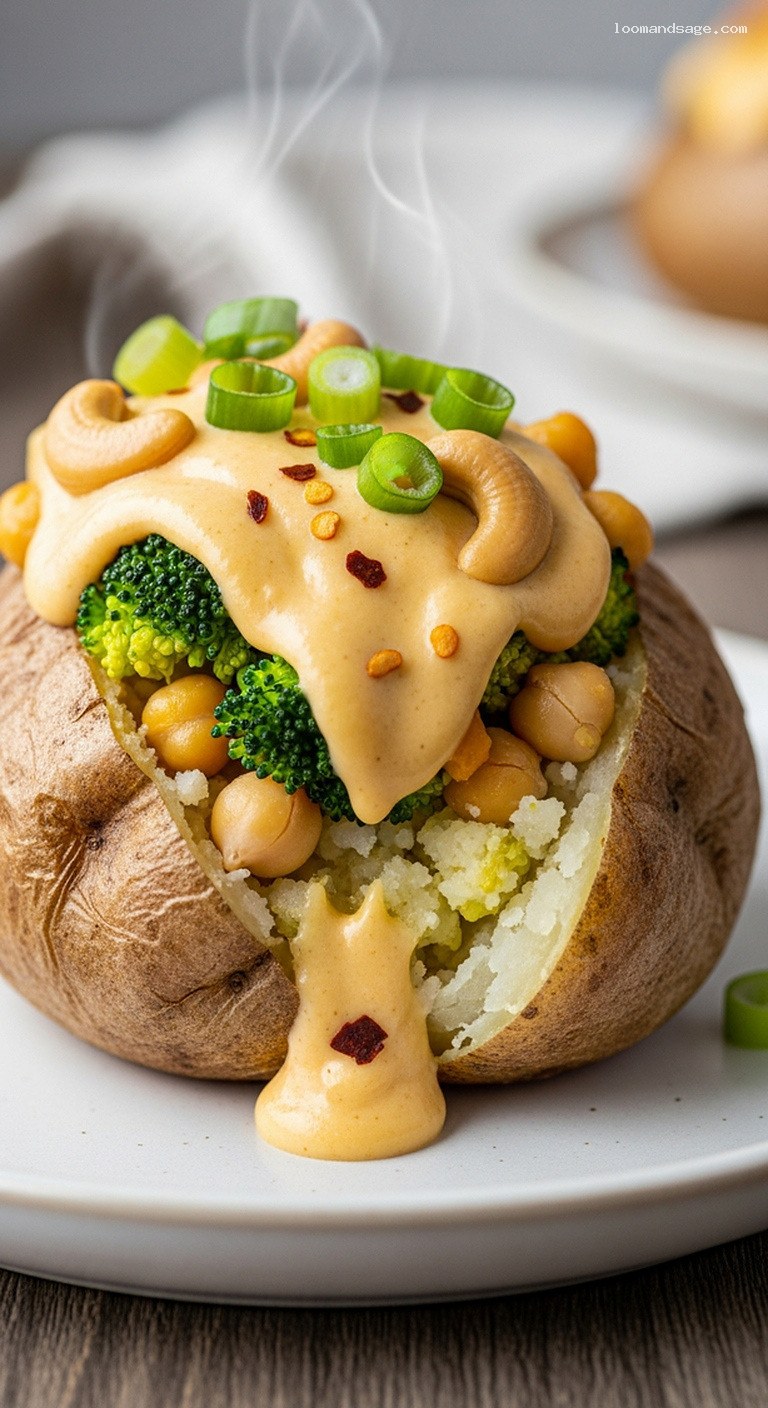
- 6. Halve potatoes, scoop out flesh, and mix with veggie-chickpea mix and some cashew sauce. Stuff shells, top with more sauce, bake 8–10 minutes, garnish, and serve.
Why You’ll Love This Recipe
- It is a full, satisfying meal in one cozy, overstuffed baked potato.
- Packed with vegetables, plant protein, and creamy dairy-free cashew “cheese.”
- Everything is made with simple, everyday ingredients you can find in any grocery store.
- Easy to customize with different veggies, spices, or toppings to suit your taste.
Grocery List
- Produce: 4 large russet potatoes, 1 medium head broccoli, 3 green onions (scallions), 1 lemon, 1 small garlic clove.
- Dairy: None (use unsweetened non-dairy milk such as almond, oat, or soy).
- Pantry: Raw cashews, canned or cooked chickpeas, olive oil, nutritional yeast, Dijon mustard, smoked paprika, ground cumin, fine sea salt, black pepper, optional red pepper flakes, optional turmeric.
Full Ingredients
For the Potatoes
- 4 large russet potatoes (about 10 oz / 280 g each), scrubbed and dried
- 1 tbsp olive oil
- ½ tsp fine sea salt
For the Veggie–Chickpea Filling
- 1½ cups small broccoli florets (about 150 g), cut into tiny bite-size pieces
- 1 cup cooked chickpeas (about 170 g), rinsed and drained if canned
- 2 green onions (scallions), thinly sliced (white and green parts)
- 1 tbsp olive oil
- ½ tsp smoked paprika
- ¼ tsp ground cumin
- ¼ tsp fine sea salt, or to taste
- Freshly ground black pepper, to taste
For the Cashew “Cheese” Sauce
- 1 cup raw cashews (about 140 g), soaked in hot water for at least 20 minutes and drained
- ¾ cup unsweetened non-dairy milk or water
- 3 tbsp nutritional yeast
- 2 tbsp freshly squeezed lemon juice
- 1 small garlic clove
- 1 tsp Dijon mustard
- ½ tsp fine sea salt, or to taste
- ⅛ tsp freshly ground black pepper
- ¼ tsp ground turmeric (optional, for golden color)
- Pinch of red pepper flakes or cayenne (optional, for gentle heat)
For Serving
- 1 green onion, thinly sliced (for garnish)
- Extra steamed broccoli florets (optional)
- Red pepper flakes (optional)
- Freshly ground black pepper, to taste
Step-by-Step Instructions
Step 1: Soak the Cashews and Preheat the Oven
Place the raw cashews in a heatproof bowl and cover them with very hot water. Let them soak for at least 20 minutes to soften. This helps them blend into a silky, creamy “cheese” sauce. If you prefer, you can soak them in cool water for 4–6 hours or overnight instead, then drain.
Meanwhile, preheat your oven to 400°F (200°C). Line a baking sheet with parchment paper for easier cleanup, or lightly grease it with a bit of oil.
Step 2: Bake the Potatoes
Scrub the russet potatoes thoroughly and pat them dry. Using a fork, prick each potato 6–8 times all over to allow steam to escape while baking. This prevents them from bursting in the oven.
Place the potatoes on the baking sheet. Rub them all over with 1 tablespoon olive oil and sprinkle with ½ teaspoon fine sea salt. Bake for 45–55 minutes, or until the skins are crisp and a knife slides easily into the center of the potatoes. The exact time will depend on the size of your potatoes.
Step 3: Prep and Lightly Cook the Veggies
While the potatoes bake, set up a steamer basket over a small pot of simmering water. Add the broccoli florets, cover, and steam for 3–4 minutes, just until they turn bright green and barely tender. You want them to keep some bite so they do not turn mushy inside the potatoes. Remove from the steamer and roughly chop into small pieces if needed.
Rinse and drain the chickpeas if using canned. Pat them dry with a clean kitchen towel or paper towel. Thinly slice 2 green onions for the filling and reserve the third green onion for garnish later.
Step 4: Make the Cashew “Cheese” Sauce
Drain the soaked cashews and add them to a blender. Pour in the ¾ cup unsweetened non-dairy milk or water, then add the 3 tablespoons nutritional yeast, 2 tablespoons lemon juice, 1 small garlic clove, 1 teaspoon Dijon mustard, ½ teaspoon fine sea salt, ⅛ teaspoon black pepper, and the optional ¼ teaspoon turmeric and pinch of red pepper flakes or cayenne.
Blend on high until the mixture is completely smooth and creamy, pausing to scrape down the sides as needed. This may take 1–2 minutes depending on your blender. Taste and adjust seasoning with more salt or lemon juice if you like. The sauce should be thick but pourable, similar to a loose cheese sauce. If it is too thick, blend in an extra tablespoon or two of non-dairy milk or water.
Step 5: Build the Veggie–Chickpea Mixture
In a medium skillet, heat 1 tablespoon olive oil over medium heat. Add the chickpeas and cook for 2–3 minutes, stirring occasionally, until they start to dry out slightly and pick up a bit of color. Sprinkle in the ½ teaspoon smoked paprika, ¼ teaspoon ground cumin, ¼ teaspoon salt, and a few grinds of black pepper. Stir to coat the chickpeas evenly in the spices.
Add the chopped, steamed broccoli and the 2 sliced green onions to the skillet. Cook for another 1–2 minutes, just to warm everything through and marry the flavors. Remove from the heat and set aside. This is your veggie-loaded filling.
Step 6: Scoop, Mix, and Stuff the Potatoes
Once the baked potatoes are tender, remove them from the oven but leave the oven on. Let the potatoes cool for about 5 minutes, just until they are easier to handle. Using a sharp knife, carefully cut each potato in half lengthwise.
With a spoon, gently scoop most of the fluffy potato flesh into a large mixing bowl, leaving a thin shell (about ¼ inch / 0.5 cm) so the skins hold their shape. Arrange the empty potato shells back on the baking sheet.
Add the warm veggie–chickpea mixture to the bowl with the scooped-out potato. Pour in about ½ to ¾ cup of the cashew “cheese” sauce. Use a fork or spoon to gently mash and fold everything together until evenly combined. The mixture should be moist and creamy but still hold its shape; add a little more sauce if it seems dry. Taste and adjust seasoning with extra salt and pepper if needed.
Spoon the filling back into the potato shells, mounding it generously. You should have 4 very well-stuffed potato halves.
Step 7: Bake Again and Serve
Drizzle or spoon another ¼ to ½ cup of the cashew “cheese” sauce over the tops of the stuffed potatoes, letting it drip slightly down the sides. Return the baking sheet to the oven and bake for 8–10 minutes, until the tops are hot and the sauce is just starting to set and turn lightly golden at the edges. For a more browned top, you can switch to the broiler for the last 1–2 minutes, watching closely so nothing burns.
Remove from the oven and let cool for 2–3 minutes. Sprinkle with the reserved sliced green onion, extra steamed broccoli florets if you like, and a pinch of red pepper flakes and black pepper. Serve hot, with any remaining cashew “cheese” sauce on the side for drizzling.
Pro Tips
- Choose the right potatoes: Russet potatoes work best because their high starch content gives you that classic fluffy interior, perfect for mixing with the creamy filling.
- Do not over-steam the broccoli: Keep it crisp-tender so it stays vibrant and does not disappear into the filling. A little bite makes the texture better.
- Blend the sauce really smooth: If your blender struggles, soak the cashews longer or use slightly more liquid. A silky sauce makes the whole dish feel extra indulgent.
- Season in layers: Taste the cashew sauce and the filling separately and season both. Well-seasoned components add up to a much more flavorful final dish.
- Make it ahead-friendly: You can bake the potatoes and make the cashew sauce earlier in the day, then stuff and do the final bake right before serving.
Variations
- Extra-veggie version: Add finely chopped red bell pepper or spinach to the skillet with the broccoli and chickpeas. Sauté just until softened before mixing into the potatoes.
- Smoky barbecue twist: Stir a tablespoon of your favorite barbecue sauce into the cashew “cheese” and add a pinch of extra smoked paprika for a deeper, smoky flavor.
- Spicy loaded potatoes: Add extra cayenne or red pepper flakes to the cashew sauce, and top the finished potatoes with sliced jalapeños or a dash of hot sauce.
Storage & Make-Ahead
Store leftover stuffed potatoes in an airtight container in the refrigerator for up to 3 days. Reheat in a 350°F (175°C) oven for 15–20 minutes, until heated through, or in the microwave in 45-second bursts until hot. The cashew “cheese” sauce thickens as it chills; whisk in a splash of water or non-dairy milk to loosen it before serving if needed. For make-ahead prep, you can bake the potatoes, make the cashew sauce, and cook the broccoli–chickpea mixture up to 1 day ahead. Store each separately in the fridge, then scoop, stuff, and do the final bake just before serving for the best texture.
Nutrition (per serving)
Approximate values per stuffed potato (1 of 4): about 500–530 calories, 18–20 g protein, 22–25 g fat (mostly from cashews and olive oil), 60–65 g carbohydrates, 9–11 g fiber, and a good amount of vitamin C, vitamin B6, folate, and potassium. These values are estimates and will vary based on the exact size of your potatoes, brand of non-dairy milk, and any extra toppings you add.